
Columbia Engineering Faculty Tenured in 2024
Twelve Engineering and Applied Science professors joined Columbia's tenured faculty in 2024. Tenure is a distinction that recognizes scholarly excellence, demonstrated capacity for imaginative, original work, and great promise for continued contributions at the leading edge of the disciplines.
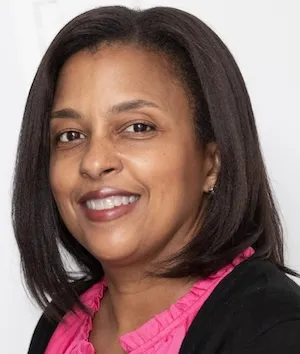
Treena Arinzeh
Professor of Biomedical Engineering
Treena Arinzeh is a scholar of tissue engineering and regenerative medicine, focusing on the development of innovative biomaterials, stem cell-based therapies and regenerative strategies to address critical needs in bone, cartilage and spinal cord injuries. She is well known for using allogeneic mesenchymal stem cells (MSCs) to induce bone formation. This particular line of research contributed to the development of the product, “OsteocelTM,” which has been used widely for correcting large bone defects.
Dr. Arinzeh has published in relevant journals including the Journal of Bone and Joint Surgery, the Journal of Orthopaedic Research, the Journal of Neural Engineering, and Science Advances among others. She has been awarded the CAREER and PECASE Awards by the National Science Foundation and is an elected fellow of the American Institute for Medical and Biological Engineering and the Biomedical Engineering Society. In 2021, she was elected to the National Academy of Inventors.
Dr. Arinzeh earned her PhD from the University of Pennsylvania. Prior to joining Columbia, she served on the faculty of the New Jersey Institute of Technology.
Treena Arinzeh's Faculty Profile
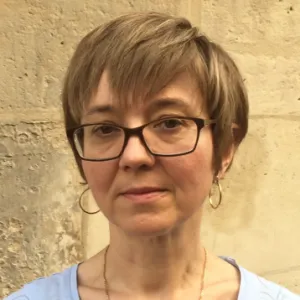
Liliana Borcea
George P. Livanos Professor of Applied Physics and Applied Mathematics
Liliana Borcea is a leader in the field of inverse problems, especially in relation to imaging and sensing technologies. Employing advanced mathematics, she addresses inverse scattering problems that arise when sensors are faced with highly complex and heterogeneous environments.
Two of her most important research streams include Coherent Interferometric Imaging (CINT) and Reduced Order Modeling (ROM). Such work has significance for a range of practical applications including radars, ultrasound or optical coherence tomography, underwater acoustics and seismic imaging. Professor Borcea has received numerous awards and distinctions including the Simons Fellowship in mathematics (2015) and election into the American Academy of Arts and Sciences (2023).
Dr. Borcea earned her PhD from Stanford University. She served on the faculty at Rice University and the University of Michigan before joining the Columbia faculty in 2024.
Liliana Borcea's Faculty Profile
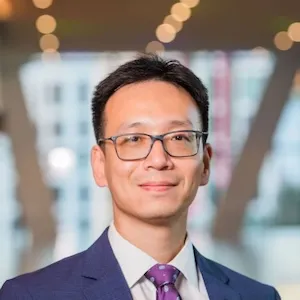
Ke Cheng
Alan L. Kaganov Professor of Biomedical Engineering
Ke Cheng is a leader in bioengineering and regenerative medicine, focusing on stem cells in cardiac and pulmonary care. He began his career working in the area of cell therapy in cardiovascular disease, but more recently his work has evolved toward establishing bioengineering techniques to improve the activity and delivery of therapeutics, including extracellular vesicles, tissue engineered products, and biomaterials.
Much of this work has been accomplished at BioTherapeutics Laboratory, which he established at North Carolina State University. In the last several years, he has applied his expertise to COVID-19 treatment and therapy. Dr. Cheng has published in top biomedical engineering journals such as Nature Biomedical Engineering and Nature Nanotech. He is a fellow in multiple societies including the American Heart Association, the Biomedical Engineering Society, the International Academy of Biomedical Engineering, and the American Institute of Medical and Biological Engineering. He has been granted numerous awards, including the Established Investigator Award from the American Heart Association.
Dr. Cheng earned his PhD from the University of Georgia. He served on the faculty of Cedars-Sinai Medical Center, North Carolina State University, and University of North Carolina-Chapel Hill before joining the Columbia faculty in 2023.
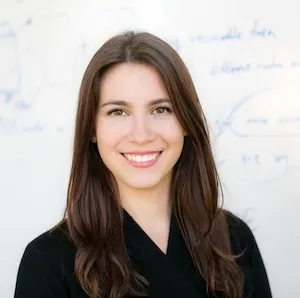
Rachel Cummings
Associate Professor of Industrial Engineering and Operations Research
Rachel Cummings adopts a formal mathematical approach toward the study of privacy, focusing on “differential privacy,” a mathematical notion that protects individuals’ privacy by bounding the maximum amount that can be learned about them during analysis of their data.
Her most notable mathematical contributions include establishing algorithms to ensure differential privacy for various data analysis tasks, across the fields of optimization, statistics, economics, and machine learning. In addition to her algorithmic work, she has also conducted studies to understand how people perceive privacy guarantees and how this affects their willingness to share data. In a paper titled, “‘I need a better description’: An Investigation into User Expectations for Differential Privacy,” she uses surveys to measure users’ privacy expectations. Her scholarship has been recognized by prestigious awards including a CAREER award, a DARPA Young Faculty Award, and a DARPA Director’s Fellowship Award, among others. She has received funding from the National Science Foundation, as well as from Google, Apple, Mozilla, JPMorgan, and others.
Dr. Cummings earned her PhD from the California Institute of Technology. She served on the faculty of the Georgia Institute of Technology before joining the Columbia faculty in 2021.
Rachel Cumming's Faculty Profile
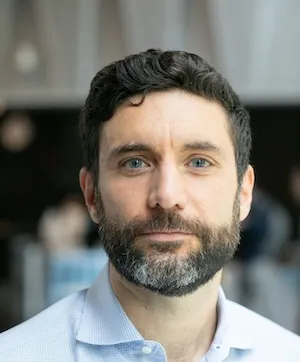
Yuri Faenza
Associate Professor of Industrial Engineering and Operations Research
Yuri Faenza is a leading scholar in the field of discrete optimization, a branch of applied mathematics that plays a crucial role in solving complex decision-making problems across diverse areas such as resource allocation, scheduling, network design, and railway optimization, among others.
The main focus of his research lies in discrete optimization problems arising in matching markets. He has moreover applied his theoretical work to real-world settings such as school matching, where he used data from the New York City Department of Education to develop policy recommendations that ensure effective and fair admissions of disadvantaged students to New York City’s specialized high schools. He is also interested in finding theoretically strong and practically solvable formulations for complex discrete optimization problems, including by leveraging and developing connections between discrete optimization and machine learning. He is the recipient of various grants and awards, including the CAREER award from the National Science Foundation in 2021 and the Meta Research Award in 2022.
Dr. Faenza earned his PhD from the Sapienza University in Rome, Italy. He joined the Columbia faculty in 2016.
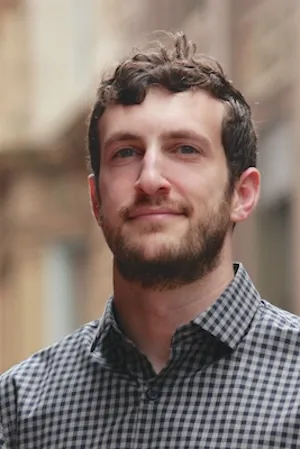
Daniel Lacker
Associate Professor of Industrial Engineering and Operations Research
Daniel Lacker is a leader in the field of applied probability. His research focuses on mathematical models of large-scale systems of interacting individuals. These mathematical models appear in diverse areas of science, where the individuals may represent people, viruses, or particles, and the large systems may be financial markets, epidemics, or fluids.
Dr. Lacker's work explains theoretical principles of how macro-level structures, such as an epidemic, can emerge from micro-level rules, such as person-to-person transmission and social networks. He has published in leading journals in the fields of probability, operations research and mathematical finance, including Annals of Applied Probability, Mathematics of Operations Research, and Mathematical Finance. For his scholarly accomplishments, Dr. Lacker has been recognized by an Alfred P. Sloan Fellowship, a CAREER Award from the National Science Foundation, and the Financial Mathematics Early Career Award from the Society for Industrial and Applied Mathematics. He was also invited to give the plenary lecture at the 11th World Congress of the Bachelier Finance Society.
Dr. Lacker earned his PhD from Princeton University. He joined the Columbia faculty in 2017.
Daniel Lacker's Faculty Profile
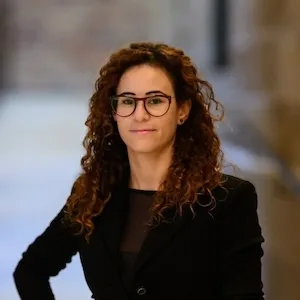
Marianna Maiarù
Associate Professor of Civil Engineering and Engineering Mechanics
Marianna Maiarù is a leader in the emerging field of Integrated Computational Materials Engineering (ICME) and process modeling. Her research specifically focuses on lightweight composite materials, including thermosets, thermoplastics, and ceramics. Combining mathematics, physics, and computational approaches, Dr. Maiarù systematically studies the manufacturing-property relationship to enhance or synthesize new or more performant materials.
While her research has extended the theoretical foundations of ICME to be used in the field of polymeric composites, the work also has direct industrial applications, especially for the aerospace and wind industries. She has received consistent funding for her work. She has been recognized with the prestigious CAREER award from the National Science Foundation and AFOSR Young Investigator Program (YIP), among others awards. Dr. Maiarù pioneered the first academic ICME approach for composites, which was awarded the AIAA ICME Prize in 2022. She also received the DEStech Young Researcher Award in 2021 and is an Assistant Editor for Composites Part A: Applied Science and Manufacturing.
Dr. Maiarù earned her PhD from the Turin Polytechnic Institute in collaboration with the University of Michigan. She served on the faculty of the University of Massachusetts Lowell before joining the Columbia faculty in 2024.
Marianna Maiarù's Faculty Profile
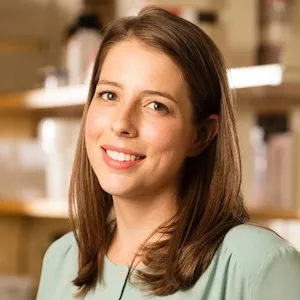
Allie Obermeyer
Associate Professor of Chemical Engineering
Allie Obermeyer works at the intersection of chemical biology and biochemical engineering, with a research program focused on engineering biomolecular condensates as well as protein and sustainable materials.
Dr. Obermeyer’s research seeks to understand how protein design impacts protein interactions and phase behavior, enabling both biological function and creation of biomaterials. Using the tools of protein engineering, she investigates the creation of membraneless organelles within living cells and in vitro by inducing the phase separation of biomolecules. Her work seeks to enable applications in cellular engineering, protein formulation and delivery, and sustainable materials. She has been recognized for her scholarship and teaching with several awards including the CAREER award from the National Science Foundation and the Camille Dreyfus Teacher-Scholar award. She has also focused on translation of research to industry, co-founding a venture backed sustainable textile start-up, Werewool.
Dr. Obermeyer earned her PhD from the University of California, Berkeley. She joined the Columbia faculty in 2017.
Allie Obermeyer's Faculty Profile
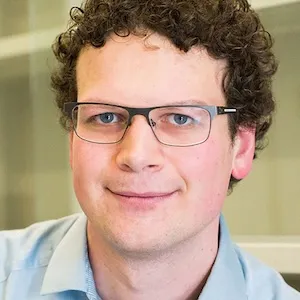
Matthias Preindl
Associate Professor of Electrical Engineering
Matthias Preindl is a leading scholar in the field of power electronics and batteries, especially for electric vehicle and grid applications.
His research contributions fall into three areas: software-defined power converters, battery tracking and management, and optimal motor drive control. While he has focused on electric transportation, his scholarly work has application in areas such as renewable energy systems, stationary storage for smart grids and industrial motor drives. He has been the recipient of multiple awards, including the CAREER award from the National Science Foundation, several best paper awards, and the Vehicle-to-Everything Innovation of the Year award in 2023.
Dr. Preindl earned his PhD from the University of Padua. He joined the Columbia faculty in 2016.
Matthias Preindl's Faculty Profile
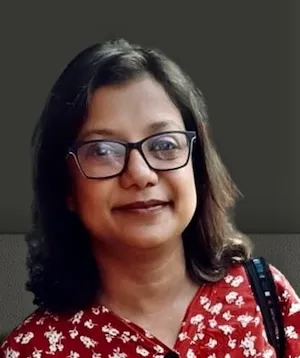
Baishakhi Ray
Associate Professor of Computer Science
Baishakhi Ray is a leader in the field of AI for Software Engineering, focusing on improving development productivity and software reliability.
Notable publications include her 2018 ICSE paper titled, “DeepTest: Automated testing of deep-neural-network driven autonomous cars.” This paper was the first to explore the challenge of automated testing for deep neural network (DNN) software and used a set of image transformations that simulated rain, fog, and poor lighting to test autonomous driving domains. In addition to safety issues, Dr. Ray has also developed state-of-the-art AI models and infrastructures to improve developers’ productivity across diverse software engineering tasks. She has received consistent funding and recognition for her research, including the CAREER award from the National Science Foundation and the IEEE CS TCSE Rising Star Award. She also received the ACM SIGSOFT Distinguished Paper Award in 2017, 2022 and 2023.
Dr. Ray earned her PhD from the University of Texas at Austin. She served on the faculty of the University of Virginia before joining the Columbia faculty in 2018.
Baishakhi Ray's Faculty Profile
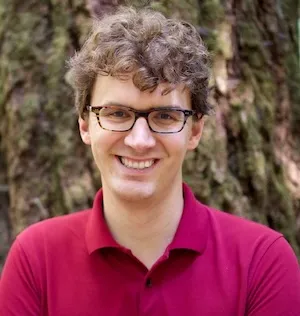
Carl Vondrick
YM Associate Professor of Computer Science
Carl Vondrick is a pioneer in the fields of computer vision, machine learning, and artificial intelligence. His scholarship focuses on how machines can “learn” to predict human activity and behavior from digital data such as videos.
In addition to being characterized by exceptional conceptual creativity, Dr. Vondrick’s research takes into consideration ethical and epistemic questions, including finding novel solutions to develop machine perception algorithms that respect personal privacy. He has published in leading computer science journals and IEEE conference proceedings. His funding includes support from multiple federal agencies including the National Science Foundation (NSF) and Defense Advanced Research Projects Agency. His research is taking the field in new directions and has been recognized by multiple prestigious awards, including the CAREER award from NSF, the Toyota Young Faculty Award, and the Amazon Research Award.
Dr. Vondrick earned his PhD from the Massachusetts Institute of Technology. He joined the Columbia faculty in 2018.
Carl Vondrick's Faculty Profile
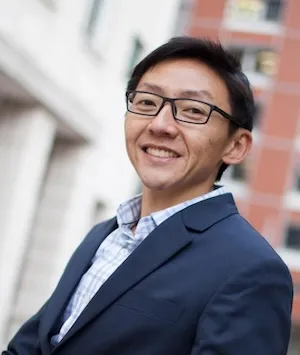
Ngai Yin Yip
LaVon Duddleson Krumb Associate Professor of Earth and Environmental Engineering
Ngai Yin Yip is a leader in the advancement of physicochemical technologies and innovations for critical separation challenges in water, energy, and the environment.
Motivated by real-world problems, Dr. Yip has made scholarly contributions and has generated innovative energy-efficient technologies for water purification, desalination, urban mining, and critical materials for clean energy. One of his most notable papers, “Membrane-less and Non-Evaporative Desalination of Hypersaline Brines by Temperature Swing Solvent Extraction” pioneers a radically different approach to reduce the energy demands of high-salinity desalination, paving the way for broader access to water resources.
Dr. Yip earned his PhD from Yale University. He joined the Columbia faculty in 2015.