
Post-PhD Career Pathways Panel
Provost Diversity Fellows alumni share their success stories in academia and in the industry.
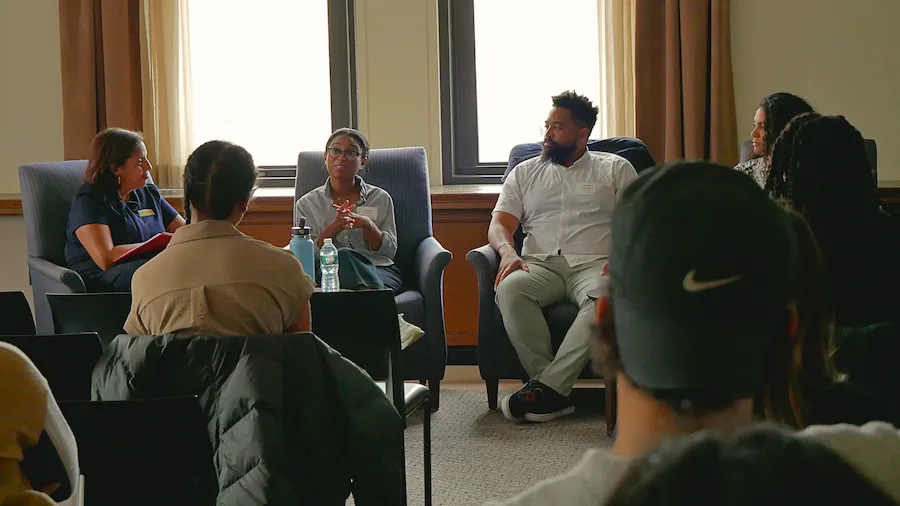
Provost Diversity Fellows Panel 2024
Thursday May 2, 2024 | 3:00 pm - 4:30 pm
Zoom Meeting
Andrew Pinkard works as a Technology Specialist at the IP boutique law firm Wolf Greenfield. Wolf Greenfield has offices in New York, Boston, and DC. He primarily reviews inventions related to chemistry and materials technologies. In addition, Andrew is a Patent Agent preparing and prosecuting patent applications across a diverse set of technical areas, including life sciences, physical sciences, and mechanical technologies. Andrew holds a BS in Chemistry from California State University San Marcos and a PhD in Chemistry from Columbia University. He is also completing his final semester of Law School at Fordham Law University in Manhattan. Congratulations on that, and thank you for taking the time during your finals to be here today.
Makeda Tekle-Smith was born and raised in Santa Barbara, California. She obtained her BA in chemistry at Pomona College in 2014. She then obtained her PhD. with Prof. James Leighton at Columbia University in 2019. Makeda then went on to conduct her postdoctoral research with Prof. Abigail Doyle first at Princeton University and then at the University of California Los Angeles. Makeda began her independent career at Columbia University in 2022.
I want to welcome the three of you, and thank you again for taking the time to be here. I just gave a brief overview. But I want you to give you the opportunity and say a few things about yourself and about your career journey so far: I'm excited to hear, because I know it's all been interesting. So who wants to go first? I'm gonna let you choose who goes first… Makeda
Makeda Tekle-Smith: Hello! Hello! I'm so so happy to be here, and I'm happy to share about my career path. I would say, it's been more linear than I think a lot of others. But throughout this I've been able to meet a ton of different people and explore various aspects of science. Frpm growing up in Santa Barbara, California, where I first got into science as a high school student, to being able to do research at UCSB, as part of one of their outreach programs. And this is why I think that outreach is so important, especially starting as young in age as possible, because it really put me on the career trajectory to get into chemistry.
I started by exploring inorganic biochemistry, which was fascinating. And I had fantastic mentors along the way, pushing me to explore these types of aspects of chemistry. And so this is why I went on to pursue a BA in chemistry at Pomona College, and I was trying to decide at the time between pursuing an art degree or a chemistry degree. And I figured that organic chemistry was sort of the perfect pairing of the two because I got to think in 3 dimensions and draw. I draw every day. But now I draw reaction mechanisms instead of portraits. And so I pursued medicinal chemistry and organic chemistry in my undergraduate career. And I really loved thinking about molecules, and how you can put them together and basically think about new structures, and how you can create them from scratch on paper and then go into the lab and make these molecules with your hands. And so I wanted to pursue that further and explore more deeply understanding organic chemistry and the mechanisms behind these types of reactions. And so I went on to pursue a Ph.D. at Columbia University. And I felt like I picked a program that really I would be very supported in, and then I would have good mentors, and that I would form great connections with my colleagues and classmates (like Andrew Pinkard, also on the call today).
I pursued a Ph.D. in organic chemistry, and total synthesis – thinking about how you can construct molecules that have anti-cancer activities and how you can build these antibody drug conjugates. And, in my Ph.D., I was really trying to decide whether I wanted to go into industry and develop new drugs as a pharmaceutical chemist, or go into academia and build my own research group, and explore these types of organic chemistry questions, and think about physical organic chemistry principles. One of the ways in which I made that decision was by pursuing a postdoctoral fellowship after my Ph.D. Exploring more photoredox catalysis and learning new skill sets, including moving more into data science and seeing how data science and organic chemistry plays together as new tools. And the more I pursued this line of academic research, the more questions I had about fundamental research. And so I wanted to pursue an academic position after my postdoc. And that's what brought me back here to Columbia. And I started my group a little less than two years ago, and so I'm building a group of people that are exploring these fundamental questions and organic chemistry. Yeah, that's me.
Diana Dumitru: That's great. Thank you for bringing it to a full circle and coming back to Columbia. We are very excited to have you, and we'd love to hear about the successes of those that go on this academia path and stay on the academia path. But we also love to hear about different pathways that That Ph.D. students take. So I'm going to give it to Andrew next, because I think he has a little bit of an interesting path, and I would love to hear more about that.
Andrew Pinkard: Sure. Thank you, Diana. Thank you, Makeda So, as Makeda alluded to, I also hold a Ph.D. in chemistry from Columbia. My path is a little more nonlinear than Makeda's is. So one thing we do share in common is that we got our Ph.D.s from Columbia, but that's kind of where some of the similarities end. When I was at Columbia, I was an inorganic chemist. Now Makeda said that she did study some inorganic chemistry when she was an undergrad, but she pivoted to organic chemistry, so we were kind of on the other side of the same coin, so to speak. So I used to see Makeda a lot. I'd go borrow chemicals from her, but I kind of turned my nose up a little bit and said, "Oh, well, that's organic chemistry. I like metals."
For those in the audience who don't know the difference between inorganic chemistry and organic chemistry, inorganic chemistry is kind of the chemistry of not-carbon and organic chemistry is the chemistry of carbon, and I would say it's the chemistry of carbon and hydrogen. But I'll leave that to Makeda.
Before I came to Columbia, I had a pretty nonlinear path, so after I graduated from high school I took a gap year, went to Community college. Another gap year transfer. Didn't like where I transferred to, and then took another, maybe not a gap year, but like a gap semester, and then went back to Community College, and then finally went to California State University, San Marcos, where I got my BS in chemistry. And I did a little research at the National Renewable Energy Laboratory, which is a department of energy lab.
And that was kind of a very different, very cool experience from the research that I got from University. And when I was there I was looking at what's called photoelectrochemical water splitting, which is essentially a fancy way of saying turning water into hydrogen, using light. And so I studied that. And that's kind of where I started developing my inorganic skill set. Prior to that, I had worked in a medicinal chemistry lab, doing a kind of pure organic synthesis. And then I went to do inorganic characterizations. And then I went to Columbia, where I studied what I would say is at the intersection of chemistry and material science. I was under the supervision of Professor Zabee Roy, who's in the chemistry department with Makeda. And we were looking at these species of materials called superatomic clusters. I'm gonna leave the details of that for another talk. But long story short, they're these kinds of aggregates of atoms that behave like atoms themselves, but are groups of atoms. So you kind of use that group rather than the individual atoms as building blocks for your materials.
And so that was a lot of fun. I enjoyed my time at Columbia, but I decided that I didn't want to go into lab work as my primary function. So I enjoyed lab work. But I am quite a people person, and so I wanted to pivot to a profession that was a little bit more people-centric and science-centric. So I ended up going into patent law. Patent law is the law surrounding inventions and technology and innovation. So if someone has a new idea, a new machine, a new process, a new proposition of matter that they want to protect legally, they can file for a patent. So that's the area of the industry that I'm in now. So I work for, as Diana said at the outset, I work for a boutique law firm called Wolf Greenfield, where I do primarily patent prosecution, and which just means filing for a patent and getting the patent. That's what patent prosecution is. I work primarily in the areas of chemistry and materials technology which is quite broad. So for example I've touched on the Moderna vaccine. Moderna was one of my law firm clients. I've touched on battery materials. I've touched on magnetic materials. I've touched on Bragg materials (materials with nano scale or microscope features where, when you stretch them, it changes the way that light interacts with the surface). So I've looked at a lot of different stuff. For those in the audience who might know a little bit about chemistry, chemistry is sometimes colloquially called the Central Science. So you can kind of do a lot of different things by starting from chemistry and then looking at different technology areas. So I look at a lot of different technologies. And that's more or less the area that I'm in. I'm happy to answer more questions about that after I give my little spiel. Last thing I'll say is, I'm also in law school – that was mentioned. So I am in my last semester, as Diana said, and the nice part about having a strong tactical background in Chemistry is that there's lots of law firms that have patent and IP practices that look for smart people that have that science background, that we can kind of use that scientific understanding while giving you some understanding of the patent law, and they pay for law school. So that's one of the benefits of working at my company is that I don't have to pay for law school, but I still have to do the work.
Diana Dumitru: That's great. And I love to hear these differences, right? You kind of started similarly in certain ways, both of Columbia. But you went totally different ways, and you're both doing something that you find interesting, and that speaks to you. So I love that. Sebastian, tell us a little bit more about your career journey, and yourself.
Sebastian Heilpern: Great thanks, Diana, and it's really nice to be on this panel with Andrew and Makeda, and so it's fascinating to hear your stories, too, so I I guess I'm kind of in the middle between you both, in a way. I'm an ecologist. And then the Ecology foundation is very much going out to nature, and I was really never too interested in going out to nature as a kid. I grew up in a city in Buenos Aires, which is a big city. I moved to Brooklyn as a teenager, and I went to a public school here, and so nature wasn't really part of that. But I started to get really interested in how we were changing nature. So eventually I got a BS at Cornell, just kind of exploring some basic pathways and ecology as a field. And I ended up graduating , and getting a job at the Wildlife Conservation Society, which is the conservation NGO, because I was really interested in how we can change the world. I still am, in a way, but maybe a little bit less heavily handed. And so at the time of Conservation society, I became again more interested in research, in not only administering and managing people and setting programmatic strategy, but also understanding what were the scientific underpinnings behind those strategies. And so I enrolled in A in a Phd. Program at the University of Chicago and actually didn't really feel like I belonged in that program. And so here's the first little piece of advice here: I think mentorship and having an environment that's inclusive and makes people feel like they identify with that program is really important, and that's nothing against that program per se. But it was just a lack of fit. And so I ended up having this really kind of tough decision. Should I stay, or should I go and end up leaving Chicago? But my advisor at the time, who is a great mentor, was like, you know, you should talk to this person at Columbia. And so I ended up talking to them, because I'm from New York, and I always have this kind of pulling tug between coming back, and I wanted to be at home. And so I ended up talking to this person in the department of ecology, evolutionary and environmental biology. And we really clicked. And I was like “Okay, well, this could be a good place to leave and explore some other ideas”. And so I ended up leaving Chicago and enrolling here at Columbia, which really transformed me a bit in terms of my research and kind of the identity that I have as a scientist in thinking more broadly from my science, ecology, and how we can integrate people into science. And so, like Andrew, I'm also a people person, and and in many different ways, both because I think science is a social endeavor, or any type of activity, like academic activities are social endeavors. You manage research groups, you interact with people every day. They're social endeavors. And the people who conduct these questions are people who might work with different animals or different elements. But at the end of the day we're communicating and interacting with people. And so, yeah. So I ended up finishing here at Columbia. And always had this idea if I wanted to go into research or do governmental type work. it's been this constant flux in my life to be honest, of this indecision of which way to go, because part of me feels that academic work can oftentimes be isolated, especially in my field, as we ask these interesting questions. But there's not a lot of interaction outside of our silos. But then I also feel like a lot of what we do is really important for the world. And so there's this constant tension here. And so I ended up getting a PostDoc at Cornell, first at the Presidential postdoctoral fellowship, and I was there for 3 years, and I started interviewing for faculty positions, and I got a couple of offers. But then I also got an offer for a new postDoc program which is the Schmidt AI in Science Postdoctoral Fellow program at Cornell Uni. And I thought to myself, how often at our career stage do we get a chance to learn a new skill? And some that's so cutting edge. And so I decided to take this postDoc. And so here I am. And in my first year, and you know, it's been really fascinating to be able to interact with computer scientists and people outside of my field to learn a new skill. In terms of where I'm going, I am in a transitory point, right? And I'm still a postdoc. And so I'm looking for faculty positions. But I'm also exploring opportunities outside of academia, just to see what lands. Throw a dart out the wall and see what sticks. Right? Yeah. So that's my current trajectory.
Diana Dumitru: That's great, and I I hope you're considering Columbia. Still, as your next step, coming back to Columbia is always a good option.
Sebastian Heilpern: Well, maybe I'll just say that it's super competitive. I don't know what chemistry is like. But in my field there's not that many jobs, you know, and it's a very, very competitive environment.. But just cause I think it's an important point that I do want to make, that there is always this pulling tug, it's a really competitive environment. How can I fit in that competitive environment? And what things can I do now that are gonna allow me to build bridges to other places, because ultimately, you know, a lot of Phd programs, train academics. And oftentimes you need to look for those opportunities outside.
Diana Dumitru: That's great, thank you for that. I think it's an important discussion to have. And these students are looking into what to do next, you know, taking those opportunities that are presented to them, and just taking them and doing something innovative like what you are doing, or taking that faculty position that's available, or going into law school and doing something very different with your degree. So I appreciate that. And I think all of you kind of touched on the next question that I have. What are those pivotal steps and decisions that you took to get you where you are. So I think you talked a little bit about that. But if you wanna just elaborate a little bit more, I would love to hear that. And I think I'm gonna go now to Andrew. This is in the middle.
Andrew Pinkard: Yeah. So I would say that my number one response to that question is, you should try to figure out what it is that you want to do, and don't try to ask everyone else what you think you should do, and I know that might sound silly if you're, like me and Makeda getting our Phds, and also for Sebastian – where we kind of looked to our PI like “What do I do now?” And they're like “do you wanna teach? Do you wanna go into research? Do you wanna make a lot of money? Do you wanna move?” I'm just like, maybe I'm not sure. And I think what you really have to do is have a moment in the figurative bathroom mirror. Just looking at yourself and saying “What do you want?” at the person staring back at you before you start asking other people, and if the answer is “I'm not sure”, then I think sometimes the better question is maybe less “What do you want, and what choices do you need to make to get there?” and more, “What skills do you enjoy using, and what skills don't you enjoy using? Who are the kind of people you want to surround yourself with? And who are people that you'd rather not so much? What kind of city do you wanna live in? What kind of salary do you wanna make? Where's your significant other, or family, or or even your close friends? What's important to you?”. And I think those are the kinds of questions that can kind of help you figure out. Well, I might be good at thing A but I really don't like thing A, and I'm maybe not so good at thing B, but that's what I want to do for a living. So I really think there's kind of a moment again in that figurative bathroom mirror or in a journal, or I mean I'll say, to ask your therapist. But anything that's gonna kind of help yourself reflect, and not so much go to the PI or the professor, to the parents or to whoever figures out what it is that you want, what it's the better choice is. Now that I know what I want, what are the things I need to do to get there? So I like working with people. There's lots of different jobs for that. If you land on “I want to be a lawyer”, then the question is, okay, well, do I need to do to be a lawyer? But it's better to think about the skill sets I enjoy using or not using, people I want to surround myself with, or don't want to surround myself with, places I want to live, those kinds of things. And that's gonna help you figure out, okay, well, I wanna live in New York. I gotta find a job in New York. Then you start kind of asking yourself the questions you would ask others, and then you can answer them – like “I wanna live in New York, or in a city”, to Sebastian's Point. You kind of have to know what you want first and don't look to others to get that to start, look to yourself and then ask others, hey, I want to do some research in New York. Do you know anyone? That's a better question for your PI. That's how I would think about the choices that you need to make to get where you need to go. You need to know where you're going, but that needs to come from you.
Diana Dumitru: That's great. Sebastian, would you like to share? I know you shared a lot about all those steps that you took, but if you have any advice on that, as well.
Sebastian Heilpern: Yeah, I mean I that's I'll echo Andrew’s point, that the person who knows yourself best is yourself right? And so at the end of the day, I still don't know what I want to do in a way right, and I think most of us don't really know. We just follow a path, and we kind of end there, that's what we're doing. And then another road opens, and we might take a left turn or a right turn. I do think that having mentors can be really important. In my family, they don't have Phds. My family isn't that kind of family, so having a role model that can help guide you in a way that is part of whatever career stage you're in is important. And I'll say this: that was during my Phd, but also when I worked at an Ngo, I had a role model, too, and like having those mentors is really important, they might not be able to tell you, take a left or take a right, but they might be able to give you a suggestion. And so being really open with that, I I had a pivotal moment. When I left Chicago to come to Columbia, I was like “Do I really wanna continue a Phd, is this really what I wanna do?” And I got a couple of interviews for other positions outside of Academia. And I was like “I don't know. This doesn't really feel right to me”. And so there's also comfort in doing what you know as well. And so I guess the last thing I'll say here is that taking risks can always be scary, but you know some big risks come with big rewards, and so don't be too risky out there. But take risks when you see an opportunity, so I'll just leave it at that.
Diana Dumitru: That's right. So without risk, there is no reward. So that's definitely an important part. Makeda, would you like to share your pivotal decisions?
Makeda Tekle-Smith: Yeah, I mean, I'll continue on where Sebastian left off about taking risks and doing things that are scary, or that you're not sure about, I think, it is one of the things that has been a homework of a lot of the pivotal decisions that I've made throughout my career. One of them: I grew up in California and spent my whole life in California, and so deciding to go to a Phd program across the country was definitely one of the big decisions in my life, and my family was like “What are you doing, you? You live in Southern California. It's warm here all the time. You've never seen snow. Why would you just stay here?” But to echo what the previous panelists have said, Columbia felt right to me when I visited and saw that environment, and I felt like I would be supported here in the Phd program. And it felt right on many different levels in terms of I thought I would love New York City as a place to live and grow. I thought that I would find good mentors and do cool science that I was really passionate about. And I think the most important thing was that the other people here, both in my cohort, were people I would get to know the network I would get to make. And I think that was definitely true, and is probably the thing I think was most important in achieving. My next steps after my Phd were the connections that I made, and the support that I got from not just my PI, but many other faculty members in the department as well as my fellow grad students and the people in my lab, and things like that. And so that was, I think, one big pivotal choice that I made, and even though that was hard, and and I knew that I would have to sacrifice other things to to make that choice, mainly not seeing my family as much, which is, is a huge decision to to make for a lot of people. But it ended up being the correct decision for me at the time. Another one, I think, was trying to make this decision, whether to go to industry or into academia. I was deciding between taking a job that would be very stable, and I thought, would I really enjoy – and I still would have enjoyed that path. It's a lot of the time these decisions aren't like one is right or one's wrong. It's just that they're different. And they lead to different questions that you're gonna be answering. But, to Andrew’s point , whenI I looked in the mirror and I had that hard conversation with myself about what I really wanted, it was clear that I wanted to to go into academia, that that was the thing that I was most passionate about, that I was most excited about, but it was also the riskier option. It's incredibly competitive. You're not always guaranteed that you're going to that. There would even be job opportunities when you're looking in the cities that you want to live in, or and it can be challenging to match that with your family and personal obligations as well. And so it was a risk to go into that, to go down that path, but I thought, well, I might as well try. And you can always make a different decision right? Go into a different direction if it doesn't work out and I was just lucky that it did work out, and I found the right position for me, and I got to choose to come back to Columbia. In an environment that I knew was gonna be very supportive, and that I would enjoy.
Diana Dumitru: That's great, and that leads us to our next question, and I know that all of you kind of hinted to it, which is about mentorship. I wanted to ask you who were your mentors, not only at Columbia, but throughout your journey. And most importantly, how did you find them and how they have helped you achieve your goals?
Sebastian Heilpern: I think mentorship is so important. I mean, a lot of us, a lot of people who end up pivoting, it's potentially because they don't have the right mentors. When I was an undergrad I had a mentor. His name is Alex Flecker, and he still is an advisor for me. I call him my stepdad, because we will have a conversation on a Sunday afternoon about who invented the light bulb, or whatever you know. Not so much about science. Yeah, he's in college, he's my current advisor: long lasting mentorship relationships turn into collaborations, and then colleagues and friends. And I think good mentors are good at certain things. They build again the sense of belonging and community. You know, they have inclusivity at the forefront in their mentorship ways. And that's really important, because, again, I can't rely on my parents for advice and academia. And so having an environment that feels like you belong is so important. So he's a critical mentor. I then had my mentor at Columbia, too, and he offered something else. You know, in the sense that it's not like career advice. But it's big picture advice. And so I think all I wanna say with this is that you can have multiple mentors, and drawing from a diversity of people can be really important because everybody has their strengths and weaknesses, just like us, just like a mentee. And so, being able to complement the different people oftentimes can lead to something that's bigger than just any individual, or even the sum of them. So in an Aristotelian way, there's a complimentary there, and that's really critical. So I'll just say that.
Diana Dumitru: That's great. Andrew?
Andrew Pinkard: I'll say that mentorship is very important to everyone. But I would say that it's especially important for folks with diverse backgrounds. And so, as we know, many folks with diverse backgrounds are under-represented, historically and currently. And so, mentorship is a way of leveling the playing field. I don't have the same background or resources. My dad is not a lawyer, while for a lot of my law school classmates, their parents are lawyers, their grandparents are lawyers, or sisters and siblings are lawyers, etc. So, having a mentor can kind of be “Well, I don't. I don't have that, but I have someone that's gone through it or gone through something similar.” It can kind of act as that pseudo guide or that pseudo parent. I use that word very lightly, because as I said earlier, you have to look in the mirror and kind of figure out what you want. You don't want to be looking to your parents, but having a mentor, you could at least say “Well. I don't want you to tell me what to do, but what do you think I'm good at?” It can be kind of helpful to have someone to kind of. Tell you about yourself and tell you what they think your strengths and weaknesses are, and I think mentorships inherently are always going to give you that kind of feedback in a good light. So they're not gonna say you're the worst. You're terrible. They're gonna say, here are the things I think that you're great at. Here are the things I wanna work with you to improve. They're gonna give you some really great constructive feedback, and they can kind of be a guide again, if you don't have that. The same resources of folks that come from, you know, more traditional backgrounds that mentor can kind of fill in the gaps and kind of open some doors and connect you with some of the right people. I remember Sebastian saying, when he gave his answer, not to this question, but to the previous one. When he left Chicago, it was his research mentor there that said to talk to this person. So mentorship is kind of this really helpful thing and thing to have. There was something that Diana asked, which was how did you find your mentors? Your mentors will find you. Your mentors will find you. There are so many times where I would get any. I've got the professor asking me to stay after class, or I’v got an email from a partner at the firm saying “Hey, by the way, you know, can you call me?”. Or “I thought you did a really great job here, you know. Let me know if you have any questions”. But having said that sometimes mentorship can be quite formal. So when I was at the national lab part of the government internship, you were assigned a mentor, and this person is going to be working with you. Those both have worked really well for me, when I've got the assigned mentor versus it kinda just happened on its own. But I would say, regardless of if it's a situation, whether it's a job or an internship, or some kind of program where it's put on you, or it's a more informal thing, like A professor or a teacher kind of saw me in school, or, a co-worker or a boss saying “I need to do this, but I'd like to help you, and kind of give you a little bit more guidance – regardless of where it comes from. It's fundamental and very important. I would at least say, and again, especially for folks with diverse backgrounds. You don't always have the same champions, like “My parents did this, I went to the best school in the world, and I had the best professors writing you that as a recommendation”, but when you have a mentor that can really advocate for you, it can be life changing. In the context of, for example, letter recommendation, having someone who really knows you (Not just professor from Columbia or Harvard – no offense, Columbia, I do enjoy having professors from Columbia having my back), when you kinda have someone that really really knows you, but maybe isn't from that prestigious background, they can speak about you in a way that's authentic and genuine, thatAndrew Pinkard: People looking at that letter like, "Wow, this is a really strong letter," versus sometimes you might get a good letter from someone with a good title, but it doesn't have that same passion, or that same connection, or that same genuineness. And so, having mentors, I would say, isn't vital because you're gonna need that as a recommendation, you're gonna need people opening those doors. And so you want someone that can really speak to the real you, and that isn’t in a generic, "Hey, this is the student in my class that did really well”, this is someone that help to save my turkey at Thanksgiving, and then wrote the best essay in the class, whatever it is. Having mentors, I think, really helps to have someone that knows you that can serve that function of writing as a recommendation, making that phone call to the professor from Chicago to New York, or (which is what I thought Makeda had done talking to you folks) say, “Hey, we should have Andrew on this panel”. It's really important to have mentors that have your back, so I'll leave it at that.
Diana Dumitru: Great! Makeda?
Makeda Tekle-Smith (She, Her): Yeah, that me I've received has completely changed my entire life. It's been so important at every career stage, and I've been fortunate to have phenomenal mentors at every career stage. I think one of the most important decisions that I made in my undergrad, My Phd, in my postDoc was who I I chose to work for, and the mentorship I received at each one of those stages because of that. And in terms of choosing that mentor, I think I really had to understand what my strengths and weaknesses were, and how the mentor that I chose could really help me in those different areas, and what the mentorship style that I thrived the best in was. Especially for picking a postDoc, the way I approached it was in a personal format. I would stay where I really wanted someone as a pi, as a, as a professor, as a mentor who was going to be incredibly supportive, who would work with me to to achieve the goals that I had set out for my postDoc, and I could not have picked a better person than Abby Doyle. I think for this she's incredible, and has been so supportive and still is. I mean, we talk regularly, and I think that this gets back to several points that have already been made where these mentorship relationships that you develop usually are incredibly long lasting. And I think that a hallmark of a good mentor-mentee relationship is that it goes well beyond the specific time point that you're potentially in their lab talking to them. And so for my postDoc, I think one of the keys as well is that I learned how to be a good mentor from my mentor as well. And this was incredibly important as I started my own group and became a mentor to several people, as I have undergraduates and graduates and postdocs coming through my lab. I learned various things from all the mentors that I've been a part of their labs over the years with, and each person has, like a unique sort of way in which they approach teaching and helping people get through their career paths. And I think again, so having a diverse group of mentors is important as well. And beyond your direct mentor, I think that was one thing that helped throughout my Phd was finding people that weren't necessarily directly related to the research I was doing, that I worked in outreach activities with, or just casually got along with. We both loved coffee, and so we saw each other at the coffee cup. And then I got to know them and got to see what their career trajectories were, and because we didn't have sort of a working relationship, I could get really honest feedback and advice from them. So like Andrew is saying,some of these mentor-mentee relationships you find sort of organically, and some I've reached out to people where I really see their career path is something that I would potentially want to go down. And a lot of people are very receptive to helping and to giving advice or giving a grant that they've written in the past to you, so that you can have that sort of help and feedback. Has been very important, I would say to my success and to finding how to do things that I didn't know again. My parents aren't academics. They didn't didn't know how to go through any of these processes.I still try to explain some of the things that I do on a day to day basis. It is funny. But finding other people that have gone through those processes, that know how to go on the academic job market. And what that process is gonna be like was incredibly helpful. And a lot of the mentors that I found that weren't my direct sort of supervisors were also people that were just a few years ahead of me that wanted to to help and to give back. And they had just gone through this process. And they're like, please take all of my knowledge. I want you to succeed as well. And that's been incredibly important. Andrew is actually one of these people who was a year ahead of me in graduate school, and I feel like it helps me a lot, being like, oh, this is how you pick a research advisor or like, this is how you're gonna take these exams. This is what they're going to be like. And so a lot of these types of more casual mentoring relationships, I think, are really important. I was an incredibly shy person, and so getting over that initial energy barrier to reaching out to people was hard for me in the beginning, but once I did that a few times, and saw how kind and open people were, it really gave me the confidence to continue on doing it. And I'm very grateful that I was able to do this and build a large diverse mentoring network, because so many people have very different things to offer as well. No one mentor can sort of fulfill every role that you need.
Diana Dumitru: I I love this, and from hearing you talk, I know that you are going to become great mentors to other students that are coming through. And I know that Makeda is here at Columbia, but also in other areas. And I think the peer mentorship is also so great, and it's great to hear. I actually didn't know until today that Andrew and Makeda knew each other, and they are still keeping in touch. So I love it. I love that part.
Andrew Pinkard: Two more things. I think that the point that you just made about peer mentorship, and Makeda also made: The way I was describing mentorship, I think, made it sound too like, you know, it's gotta be a teacher professor. That's a really great point. But I wanna underscore that it doesn't have to be. You know, this is the 80 year old professor that's been doing this for 50 years. It can be, hey, this is like someone that's like, not too far away from me. I'm actually gonna pull a quote or not a quote. I'm gonna paraphrase Issa Ray who says something about networking across instead of networking up.
Networking across means look for the same people that are supposed to be where you are. And hey, what do you want to do? Yeah, I wanna get there. That can be a much better motivator and a better source of mentorship than looking for this hypothetical 80 year old person, but that was a much different place in 1950 than it is in 2024. I'm sure people, especially at Columbia, can recognize that. So I think that's a really great point. So I just wanted to underscore that.
Diana Dumitru: I appreciate that. Thank you so much. And I do wanna ask you about the challenges that you encountered in your journey. And yeah, I can understand that some of these mentors may have helped you overcome that challenge. But how did you overcome it on your own, or with the help of others?
Andrew Pinkard: Sure I'll Take that. So this is actually somewhat related to the mentorship question. Mentorships can be lifelong, or they could also be for a year or 2, so don't feel like, “This person was my mentor, and I need to stay talking to this person the same way forever”. Relationships change. I know that sounds a little obvious. But your mentor is just like your parent, your spouse, your sibling. Where, hey? There's periods when you are really close, and there's periods where you haven't talked to my mentor for a couple of years and I should reach out. So don't feel like you need to be married to that mentor. Ony challenges, sometimes I feel like I outgrew my mentors. I'm now a law student and one of my mentors, Professor Roy, in the chemistry department, he can't help me with. I have a really tough appeal brief to write to the Patent Office. So what do I do? He's not gonna be able to give me any guidance. So I think one of my biggest challenges is that I'm a bit of a unicorn, and I think a lot of folks with diverse backgrounds tend to be a little bit of a unicorn. And when I say Unicorn, I just mean so unique that maybe some of the things that your mentor did aren't even possible for you. So I'm not surprised. Most or all of my mentors have been white, so they can give me certain pieces of advice, but there's certain things that they just won't really be able to speak, to understand, navigate through, because they've just not had that experience and not seen enough, their students have that same experience. So that's been a challenge for me: kind of outgrowing mentors and feeling like this person can only help me so much.
Another challenge related to again being a diverse person is I often feel a bit tokenized, and it's not necessarily bad, I would say. In many cases it's good where you're kind of the only one, that goes back to that unicorn thing they're like “We want more diverse people”, and I'm always the first person that's like “well, we gotta get Andrew on this thing”, which is quite flattering, but it can also be very overwhelming when you're the only one, and you're asked to do something. You feel like you have that fictive kinship with your other people in your background, but they're not there to support you. So it's just me often as the only African American male in many of these spaces. And so it's a lot of pressure. You sometimes feel like you can be stereotyped. You sometimes feel like you can be prejudged. and it's not always a great feeling. But what I would say to that particular challenge is, rather than going to HR, go to this person that is hurting my feelings and Iwanna fight, or I wanna push back, but often there's a missing element of intent, or missing element of malice (and I I hate sounding like such a lawsuit about that, that sounds like a like a criminal law thing) but most times people aren't intending. I want to be a jerk right now and really undermine this person's background culture experiences. But they just say things without thinking. I said things without thinking. I'm sure my panelists have said things without thinking before. I'm sure everyone has. Rather than take it as "I'm gonna take action, I'm gonna go to HR." You can do that, you're right, and you have to judge the situation. But I try to take those moments of tokenism, stereotyping, or prejudice as teaching moments at least the first or second time it happens, and I think the people that I work with find that to be so much more educational and welcoming and collaborative than "Hey, I said the wrong thing." And now this person's mad at me and doesn't like me, doesn't trust me.
You have to be your own judge to figure out that intent piece that's hard to generalize right here in this panel. But again, my experience has been, most people aren't doing something with intent or doing something to hurt or malice. They just don't know. They're just ignorant. They're confused.
Using that tokenism to your advantage, like “The other day you said this, or you did this, or I felt like you were typecasting here in this way. Can we talk about it?” and I've never had someone say, "No, we can't talk about it," and I think what they take from that as well: "This person is a good educator/explainer. They're gonna grow the work rate with clients or their people." It's quite a benefit to you to be able to do that and just say, "Hey, I went right to HR, we're gonna have to have arbitration mediation again." That is completely within our rights to do, depending on the circumstances.
I find that people find if they can make that mistake or kind of have that awkward moment, and you talk to them about it rather than come on the defensive. It teaches them something a lot more valuable about working with other folks with diverse backgrounds. So challenge again, tokenism and outgrowing mentors, and I think many folks in the audience will probably deal with some kind of flavor of these things, but I hope that my spiel can help you navigate that.
Diana Dumutru: Thank you for sharing that.
Sebastian Heilpern: To echo something that Andrew said in a different way, is that a lot of people might come off as unkind and with no generosity. And I think that good mentors are those that are actually kind, and seeing that kindness in people and that generosity is something up to you taking it to the next level. So I'll talk about 2 challenges. One is fitting the mold. So from the perspective of a career, or what maybe your sciences and intellectual or professional ambitions are, or even your work-life, balance ambitions are, oftentimes there's a lot of expectations to fit a mold to do what the departments want. Or that 80-year-old professor who wants you to be just like him, right because he did it that way and so, and he wants to replicate, or they want to replicate themselves. Right now, it's a challenge for me to find the right fit for a position, because I think that the research and my research program doesn't really fit a lot of categories, there's silos. And the academic institutions were built a long time ago. There’s the department of Chemistry and the department of Biology and the department of Sociology. But reality is that intellectual curiosity and science is a lot broader than just one of those silos. And so how do you actually fit something that is a lot broader than just what the prescription of the mold is, where that's also being a lawyer, etc. The other piece I want to mention here is another really persistent barrier and challenge for me. It's been financial. I have folks who don't have much money, or have no money, and as I continue being a postDoc, I'm starting to think more about how can I actually set myself up to support them, like they put a lot of eggs in their basket, which I'm gonna call myself their basket. And how do I give back to my family and my community in a way that is possible. And you know, being a grad student, you don't make a lot of money. Guess what, being a postdoc? You don't make a lot of money, or at least enough money to take care of the people you love. So there's expectations I get sometimes from mentors like, "Oh, you know, you have this salary, you can do this, or you can do that." It's like “No, man, like I can't do that. I have to do other things with my money”. So, those types of financial challenges are persistent. From when I just came here as a high school student all the way to today, this constant financial challenge. And I think that's a major thing that can take a big toll on people, especially people who come from different backgrounds, from that, you know, 80-year-old professor.
Diana Dumitru: Thank you for sharing that. Makeda?
Makeda Teklw-Smith: Yeah, I mean, I think that Sebastian just touched on one of the challenges that I was going to bring up as well, which is financial. It can be incredibly challenging. And this is one of the things that I struggled with by moving across the country away from my family. Flights from New York to California are incredibly expensive. So, that was one of the considerations I had to make with how often I was going to see my family by moving across the country. And that was a big challenge, to find ways of still connecting with them, of finding support within the community that I was now in New York. Since I wasn't going to have as much connection with them on a day-to-day basis. And also to see sort of policies that have been put into place in your university or in your department that don't fit people like myself that were financially more burdened, and trying to get people to realize that some of these policies could be changed in different ways to support a wider diversity of people, I think, has been one of the things that I've struggled with, and tried to work on throughout my career. And now it's actually quite gratifying as a faculty member with a little bit more leverage to bring those things that I've thought about that would help a lot of different students actually into being. And that's one of the reasons why I chose to be an academic and a professor, to bring that sort of perspective into the department. And that's been one of the things I think I've had to internalize. For a lot of the changes that I want to see made in these communities in these academic spaces, it might take many years to actually get it to be. But if you're persistent and work, find the people that also support these ideas, there actually can be change that's made over the years. I would say another challenge that I've dealt with over the years is just things that come out of nowhere that you can't predict. Like you can have a plan, but it might just completely crumble at any point in time. And how to sort of take those challenges and hurdles in your stride and figure out what you can affect and what you can change and what you can't. And sort of learning to accept that, I think a lot of people can relate to COVID being one of those things. So, that happened right when I started my postdoc. And so I'm an experimental chemist, and not being able to be in the lab and do the things that I thought I was going to be able to do was a big challenge. And I was also restricted to traveling, so I couldn't see my family for several years as well. And the academic job market was not great as well. I had this plan for, like I'm gonna do this in my postdoc, and I'm gonna publish these papers because I'll be in the lab for this amount of time. And then I'll go ahead and apply to an academic position, and everything will be great. And then I had to sort of reevaluate everything and say, "Okay, this is not the plan anymore. Let's see what I can do to continue on and still achieve my goal, even though it might not be the linear path that I thought I was going to be going through." And one of the things that really helps with that, I think, was having a supportive mentor who was like, "Okay, we can extend your postdoc, and we can apply for these other grants to support you and do all of these things." So that was incredibly helpful, to have that support and to be able to ride through challenging times and things that you can't really control.
Diana Dumitru: That's great. And also, we want to take you back to the time when you were here at Columbia as a student. We wanted to find out what type of support systems were most helpful to you, and how did you find that here at Columbia? That hopefully will help the students think about some of those systems that are there in place for them that they might not know about. Sebastian?
Sebastian Heilpern: I need to think because I don't want to repeat the same thing about mentors, right? But because it just sounds like a broken record. But the reality is that having a good group of people around you is fundamental. It allows you to become more resilient. For example, during Covid, if you have somebody who can throw in a couple more bucks to help you, that's important. At Columbia, I found comfort in my cohort. Having a community formation that a department can encourage is important within the department and across different departments. For instance, I was part of the graduate student Union, where I also found a community. Policies or mechanisms that can encourage community formation are fundamental. Sometimes you might go to an event and see somebody you saw before, and then you can connect afterward. Stepping out of your box to build community is crucial. For me, having my family and my extended family was important to find opportunities to build community outside of the institution. Community, mentorship, those are all things that help you become more resilient and are part of networking.
Diana Dumitru: Right. Andrew?
Andrew Pinkard: Yeah, I don't think you're being repetitive, Sebastian. Sometimes repetition can help, even if you are. But I would pull from the thread of your cohort and go broader than that. As I'm talking out loud, maybe even take it back to elementary school or just making friends. I know that sounds a little silly, a little childish, but at Columbia, and at a lot of these great universities, you may come in with a chip on your shoulder and be competitive. Competition is generally good, it's motivation. But hyper-competition isn't good. It says, "What can I do to beat everyone, no matter what." Try to tamp down that feeling of hyper-competition. Mikada was part of my network when I was at Columbia.One of the things I loved about the Chemistry Department at Columbia was the collaborative environment. Unlike some other schools I visited, where even your classmates might sabotage your research, at Columbia, it felt like, "Okay, this doesn't make any sense to me. Does it make sense to you?". And having that collaborative spirit was evident throughout my five years there. I met Makeda when I was a second year, and she was a first year. She became one of the friends I made. I think it's important not to stick just to your major or department. Your classmates in your department are key, but sometimes you want to talk about things other than chemistry. Columbia had a more diverse community, which was refreshing. I did a couple of fellowships through the Center for Teaching and Learning. I met people from different disciplines, like historians and philosophers, who became good friends. Having someone to talk to who wasn't focused on chemistry was a relief from the lab environment. I encourage people to reach outside their bubbles, attend events across campus, and meet new people.
Diana Dumitru: Right. Makeda?
Makeda Tekle-Smith: Yeah, the people I met at Columbia made my time there. They're still some of my closest friends today. It's a huge part of my life. Columbia provided spaces where I found camaraderie and support, like soccer groups. Playing soccer on Thursday nights with people from across the city was important for my mental health. New York offers diverse communities for different interests. I found a hula studio on the Upper West Side, which was perfect for me. Columbia's intramural sports teams helped me explore new interests like softball. These groups provided a release from the lab environment and allowed me to learn new skills beyond academia.
Diana Dumitru: Great. Just one last question: if you could go back and give your past self one piece of advice as a doctoral student, what would it be? And I'll go to Andrew.
Andrew Pinkard: Invest in Amazon. You'll be a billionaire with it before you know it. No, I’ll be more serious. I think it would be a little bit more of the advice that I shared with this panel earlier, which is to stop looking to other people to figure out what you want. Figure out what you want, in front of that bathroom mirror again. But I'll expand a little bit on that. I think taking a moment of self-reflection is crucial before making your next step, whether that's going to grad school for a Ph.D., getting a master's degree, or whatever it may be. It's essential to have a moment of self-reflection. This reflection should be done with someone objective, not a parent or spouse, someone who can provide unbiased advice. If you're not comfortable with therapy or counseling, try it out because it can provide objective advice. Use resources like career counselors available at Columbia. Whether it's journaling, looking in the mirror and talking to yourself, or using your phone's notes app, actively engage in self-reflection. Don't just think about what you like or don't like; write it down or talk about it with someone. Sometimes, what sounds good in your head might not sound as good when you say it out loud. So actively reflect on your goals and aspirations with someone objective. It's crucial to have an objective perspective on your career path, whether it's from a therapist, career counselor, or even a peer. What matters is objectivity because you don't want someone just telling you that you're good at everything. Actively reflect and be self-reflective in your career planning.
Sebastian Heilpern: Being self-reflective and taking advantage of opportunities like career planning are crucial. Utilize the resources available because, in hindsight, I wish I had used them more.
Diana Dumitru: I love that advice, Sebastian.
Makeda Tekle-Smith: I'd tell myself to be kinder to myself and enjoy life outside of academia. Balance is essential, and taking breaks won't break your career trajectory.
Diana Dumitru: Self-care is definitely very important. That concludes the questions I had for the panelists. We have some participants here who may have questions. I want to open up the floor for them. If you would like to unmute yourself or write the question in the chat, we are open to that.
Diana Dumitru: Let's give them a few minutes to see if anyone has any additional questions. I definitely feel like all of you have given us so many good points, such great advice, and I appreciate you taking the time to be here with us. I have a question: Annabella, for Andrew, how do you feel your academic background has helped you so far in your law path? And how do you anticipate it will help you in your law career?
Andrew Pinkard: Yeah, I've got 2 answers for that. So I would say, number one: I was a chemist, as I said before, so going to law school was based on rational thinking. So I have the skill set already of, hey, we start with a premise. We've got some facts, some information we call data and science. And you make a conclusion. Hey, this is what I think's going on, so to speak. So I would say that my academic background certainly trained me well for the kinds of thinking that you're going to use in law school. Having said that, one of the challenges that I experienced was I did a Ph.D., you know, a Ph.D. is research-based. So you're talking about something new, something that's not been done before, you're trying to dive into an unexplored area. Certainly, start from a place that's known, but you're trying to figure something new out. I thought that law school was going to be the law version of getting a Ph.D. And after my first year, I was like, that was completely incorrect. Law school does not encourage creative thinking. Unfortunately, you can certainly find things within law school that get a little bit at it. But at the end of the day, the lie is: what's the law, i.e., what's already known about the law? And how do we apply it to these new facts that look quite like the old facts? So it wasn't as creative an experience as I expected. But the scientific aspect was in my alley because I'm looking at numbers, data. Well, I would say that science should be creative. It's hard to get to the spot where you actually know enough to create things that people want to use. And so that's the challenge. And a Mikado can attest to this, I'm sure. Ph.D., but also mentoring Ph.D. students, which we're gonna start from somewhere where we've got these known mechanisms and whatnot. But eventually, I want you to come up with a brand new mechanism that impresses me. That's the scary part. And so having that experience from the Ph.D., I thought would help me more. But it did not help me. So the partly thing that did help me was, okay, start from a hypothesis, data, data, conclude. The laws are quite similar in that fashion of using rational thinking to get to where you're gonna go. The second thing, I would say, is, in order to be a patent agent or a patent attorney, you need a STEM background. That's not an option. So in order to sit for the exam, there's the regular bar, which I'm sure most folks have heard of, but there's a separate exam called the patent bar, the patent registration exam. Without having a STEM background, you can't even take it. So you can't actually even practice. And from that kind of literal sense, it was necessary for me to have that background; otherwise, I couldn't actually do the job that I wanted to do. And so I would say, in that kind of more concrete sense, you...I needed this degree and this background to actually practice the law. But maybe more generally, the critical thinking, the rational thinking that you're learning in school, or that I learned in school, totally helped with law school. So the things that overwhelmed me about law school were that this material is unreadable. It was definitely different material, right? I was a chemist, and then it was contract law, criminal law, torts, things like that. And once I got used to the terminology, then it was okay, just apply it. And then it wasn't so hard. It definitely did help. But the creative thinking part of the Ph.D., which I thought would help me more, has only helped me a little bit. It helps me immensely at work. That's sort of why they hire people with my background. But when I try, I remember a particular midterm where we got feedback from the professor that was like, great job. Love this argument. The law should be this, but it's not this. It's gonna be this in a year. But because it's not this now, you know, B-minus. And I'm like, what? You loved it. “I did love it. But I'm asking you to just restate and articulate what's already the law. I love that you came up with a new policy, a way of doing this, but that's not the thinking”. And that was quite frankly disappointing. But also, that is what you learn as a lawyer. You need to look at old cases and see if those old cases can apply to your new facts. And a lot of the times, the new facts are very similar to the old facts. So I was kind of disappointed. But that's also...that is part of law school. So that's probably a little bit longer of an answer than you're looking for, but it does help, but sometimes not as much as you would hope.
Diana Dumitru: Thank you for providing that perspective, Andrew. It was very helpful. Annabelle thanks you too. I wanted to thank you again for providing such good feedback to the students, for giving them such great advice. I'm sure it's going to be very beneficial. Let's give our panelists a virtual round of applause, and hopefully, next time it's going to be in person. I really hope that you are going to come to the next event that we have in person, which is probably going to be in the fall. Thank you again so much. And I look forward to seeing you next in person. Bye, everyone.
Sebastian Heilpern: Thank you so much, and feel free to reach out if anything comes up. Nice to meet you, Andrew and Makeda.
Makeda Tekle-Smith (She, Her): Nice to meet you as well. It's been a pleasure.
The Inclusive Faculty Pathways Initiative in the Office of Faculty Advancement hosted on May 2nd, 2024 on Zoom the Post-PhD Career Pathways Panel.
Three Provost Diversity Fellows alumni shared their success stories in academia and in the industry: Sebastian Heilpern, (GSAS ‘20), who is now a Postdoctoral Fellow at Cornell University; Andrew Pinkard (GSAS ‘18), Technology Specialist & Patent Agent at Wolf Greenfield; and Makeda Tekle-Smith (GSAS ‘19), Assistant Professor at Columbia University.
Panelists:
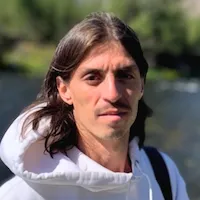
Sebastian Heilpern
Eric & Wendy Schmidt AI in Science Postdoctoral Fellow, Cornell University
Sebastian Heilpern is an ecologist and sustainability scientist focusing on understanding the causes and consequences of biodiversity change. He is particularly interested in the intersection between aquatic ecosystems, fisheries and food security. Currently a Eric & Wendy Schmidt AI in Science Postdoctoral Fellow at Cornell University, he received a PhD from Columbia University, an M.S. from the University of Chicago, and has worked with the Wildlife Conservation Society for over 10 years on issues related to freshwater conservation in the Amazon.
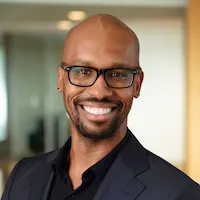
Andrew Pinkard
Technology Specialist & Patent Agent, Wolf Greenfield
Andrew Pinkard works as a Technology Specialist at the IP boutique law firm Wolf Greenfield. Wolf Greenfield has offices in New York, Boston, and DC. He primarily reviews inventions related to chemistry and materials technologies. In addition, Andrew is a Patent Agent preparing and prosecuting patent applications across a diverse set of technical areas, including life sciences, physical sciences, and mechanical technologies. Andrew holds a BS in Chemistry from California State University San Marcos and a PhD in Chemistry from Columbia University. He is also completing his final semester of Law School at Fordham Law University in Manhattan.
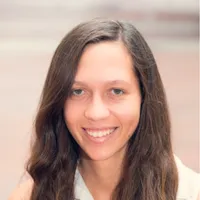
Makeda Tekle-Smith
Assistant Professor of Chemistry, Columbia University
Makeda Tekle-Smith was born and raised in Santa Barbara, California. She obtained her BA in chemistry at Pomona College in 2014. She then obtained her PhD. with Prof. James Leighton at Columbia University in 2019. There she developed new methods to construct asymmetric C(sp3)–C(sp3) bonds and applied these technologies to the total synthesis of non-aromatic polyketide natural products. Makeda then went on to conduct her postdoctoral research with Prof. Abigail Doyle first at Princeton University and then at the University of California Los Angeles. Makeda's postdoctoral work has focused on generating and harnessing reactive radical intermediates through photoredox catalysis to unveil new reactivity platforms. Makeda began her independent career at Columbia University in 2022.
Past Events
Provost Diversity Fellows Panel 2023
Wednesday, April 26, 2023 | 3:00 pm - 5:00 pm
Butler Library, 523
This panel featured Mario Cancel Bigay (GSAS ‘21), who is now a postdoctoral fellow at Columbia; Ashli Carter (Business School ‘19), a lecturer in the Columbia Business School; Elise Myers (GSAS ‘21), from Boston Consulting Group; John Pamplin II (MSPH ‘14, ‘20), Assistant Professor of Epidemiology at the Mailman School of Public Health; and Rayven Plaza (CSSW ‘18), who now works at Google. The panel was be moderated by Adina Berrios Brooks, Associate Provost for Faculty Diversity and Inclusive Pathways, and followed by a reception to celebrate the end of the semester.
Panelists:
Mario Cancel-Bigay
Core Lecturer, Columbia University
Ethnomusicologist, singer-songwriter and poet, Mario Cancel-Bigay was born in Puerto Rico in 1982. He learned to play the Puerto Rican cuatro, the archipelago’s national guitar, at age twelve at public music school Libre de Música in San Juan. In 2005, he earned a B.A. in Modern Languages (Portuguese and French) from the University of Puerto Rico, and in 2014, an M.A. in Interdisciplinary Studies at New York University. In 2021, he earned a Ph.D. in ethnomusicology in the Department of Music of Columbia University. His research revolves around anticolonialism, decoloniality and cross-cultural encounters as heard through Puerto Rican nueva canción, chanson québécoise and related sounds of resistance from Puerto Rico and Québec during the 1960s and 1970s. Currently, he is a postdoctoral fellow at Columbia University where he teaches Contemporary Civilization. He is the proud father of a brilliant Puerto Rican-Haitian girl named Gabriela.
Ashli Carter
Lecturer in the Management Division, Columbia Business School
Ashli Carter is a Lecturer in the Management Division at Columbia Business School. Currently, she teaches topics in leadership, negotiations, team decision-making, managing difficult conversations, and cultivating a growth mindset in the MBA and Executive Education programs, as well as for CBS administrators and staff. Prior to joining CBS faculty, she taught MBA and undergraduate courses in leadership and professional ethics at NYU Stern where she was an Assistant Professor/Faculty Fellow of Management and Organizations. Ashli studies how seeing the “forest” (thinking more abstractly) versus seeing the “trees” (thinking more concretely) shapes how individuals respond to unexpected or unwanted outcomes in the workplace. She is also interested in stereotypes regarding different groups’ ability to think more abstractly and examines how these stereotypes shape opportunities in the workplace and in society more broadly. In addition to her teaching and research, she works with professionals one-on-one and in small groups as a leadership coach. Ashli Carter received a Ph.D. and M.A. in Management from Columbia Business School and a B.A. (with honors) in Psychology from Stanford University.
Elise McKenna Myers
Consultant, Boston Consulting Group
Elise Myers works at the Boston Consulting Group (BCG) in DC, where she works on climate change and clean energy technology strategy for both private and public sector clients. In recent projects, Elise developed strategy for US competitive advantage in emerging clean technology and designed strategy to ensure a just and equitable retirement of coal and natural gas plants. Before BCG, Elise received her PhD from Columbia University / Lamont Doherty Earth Observatory in Feb '22 with a dissertation focused on water quality in the Hudson River Estuary. In her dissertation research, Elise developed methods to predict microbial sewage contamination in urban waters using a combination of models, experiments, field work, and satellite data analysis. Elise was committed to making her research publicy-accessible through community organization partnerships, public talks and workshops, educational videos and media appearances. Elise is passionate about DEIA and, while at Columbia, was also co-chair of Students of Color Alliance.
John R. Pamplin II
Assistant Professor of Epidemiology, Mailman School of Public Health
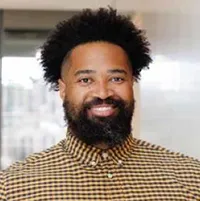
Dr. John R. Pamplin II is a social epidemiologist who studies the consequences of structural racism and systemic inequity on mental health and substance use outcomes. His program of research investigates drivers of racial patterning in major depression, emerging racial trends in adolescent and adult suicide, and the mental and physical health consequences of the hyper-policing of Black and Brown neighborhoods. Dr. Pamplin's research further explores policing as a determinant of racial inequities in substance use and carceral outcomes by exploring how variations in police enforcement may lead to differential effectiveness of public health laws, including those intended to reduce harms of the overdose crisis.
Rayven Plaza
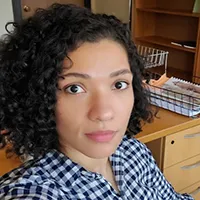
Quantitative User Experience Researcher, Google
Rayven Plaza earned her Ph.D. from the Columbia School of Social Work in 2018, then worked as an assistant professor at the University of Texas at Austin for a year. She currently works as a Quantitative User Experience Researcher at Google. She lives in New York.