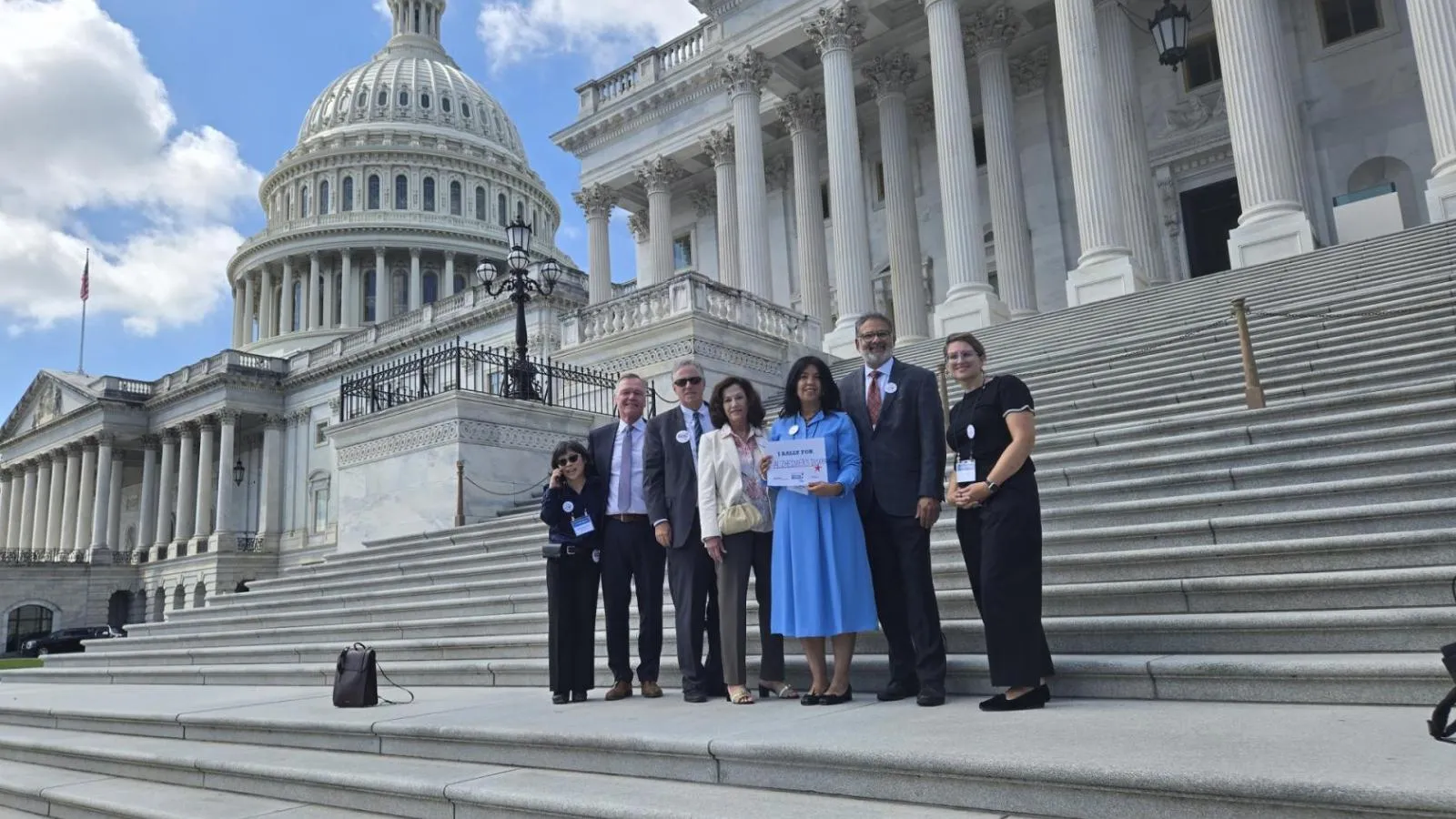
The aiX Faculty Fellowship Program is supported as a Faculty-led initiative by the Office of the Vice Provost for Faculty Advancement and led by Dr. Tian Zheng, Professor of Statistics.
Funded by a grant from Google, co-sponsored by the Data Science Institute and the Center for Teaching and Learning, the aiX Faculty Fellowship Program supports faculty across disciplines in exploring and examining what AI means for the scholarship and professional practices within their discipline, and developing an AI education project contextualized within their own discipline.
Grounded in the belief that faculty are the drivers of transformative educational change, this emerging initiative seeks to accelerate progress in AI education at scale by empowering faculty to lead innovative, cross-disciplinary efforts.
The program creates space for inquiry, experimentation, and collaboration around AI’s implications for teaching, research, and knowledge creation.
This is a faculty-led initiative in the Office of the Vice Provost for Faculty Advancement.
The inaugural fellows and their projects are:
Zohaib Ahmad, MD
Assistant Professor, Vagelos College of Physicians & Surgeons
Project: Musculoskeletal Radiology & Education
Projects Description: I am interested in the role of AI and education, specifically how AI affects knowledge/skill acquisition and skill retention, and subsequent curriculum formation with AI. This is especially important in radiology where AI is being used more of a tool to help diagnose things. I believe this program can help me further medical student and resident education as AI becomes more ubiquitous. The goal would be to learn how to create a curriculum that supports knowledge/skill retention.

Allison Aiello, PhD
James S. Jackson Health Longevity Professor of Epidemiology, Mailman School of Public Health
Project: Cognitive Health, Aging, & Stress Biology
Project Description: At this stage, I’m still exploring how my new course fits within traditional public health teaching. While several departments are developing stand-alone AI courses, the approach often feels fragmented - like trying to plug a hole in a dam. I hope this fellowship will provide space to think more broadly about how AI can be meaningfully integrated into the curriculum and how we can better define the skills students will need to thrive in an AI-driven future. As the technology evolves so rapidly, I often find myself learning new tools on the fly and adapting course content in real time. This fellowship would offer the opportunity to step back, reflect, and develop a more cohesive and forward-looking strategy for integrating AI into public health education within a dynamic and sustainable framework.

Teresa Janevic, PhD, MPH
Associate Professor of Epidemiology, Mailman School of Public Health
Project: Maternal & Infant Health Epidemiology
Project Description: I strongly believe that epidemiology must take a forward-looking approach to AI integration in foundational courses, and this fellowship provides the structured time and support needed for meaningful learning and course redesign. My course is due for a major refresh, and with dedicated time already set aside for spring–summer 2026, this opportunity aligns perfectly with my plans. Together with Dr. Matt Lamb, I aim to break down silos between our sequential courses by using generative AI to create personalized, scalable lab experiences tailored to students’ competencies, interests, and progression. We also plan to refine a previously piloted AI-supported teaching model and develop a “language translator” across statistical software platforms (e.g., SAS and R), enabling students to become multilingual in data analysis tools. This approach will better prepare students for diverse professional environments and evolving workforce demands.

Matthew Lamb, PhD
Assistant Professor of Epidemiology, Mailman School of Public Health
Project: Epidemiology & Pedagogy
Project Description: I am a strong proponent of proactively integrating generative AI into our methodological and foundational coursework. In discussions with Dr. Teresa Janevic, we recognized that although our sequential MPH epidemiology courses are designed to build on one another, they are often developed in silos without a shared structure. Through this project, we aim to use generative AI to better integrate course content, expand the range of statistical programming languages taught, and create personalized “scaled progression” lab experiences tailored to students’ competencies and interests. These labs will dynamically adjust in complexity based on students’ understanding, similar to adaptive assessments. We also plan to refine a previously piloted AI-supported teaching approach and develop a “language translator” between software platforms such as SAS and R to better prepare students for diverse professional environments.

Natalya Pasklinsky, DNP, ACNP-BC, CHSE, FNYAM
Associate Professor and Assistant Dean, School of Nursing
Project: AI Agents and Pedagogy for Critical Thinking
Project Description: I am applying to the aiX Faculty Fellowship to advance my work integrating artificial intelligence into simulation-based health sciences education. My goal is to design and evaluate an AI-augmented simulation framework that adapts in real time to learners’ clinical reasoning and communication behaviors, while also deepening my understanding of the backend AI functionalities that drive these adaptive systems. Through this fellowship, I aim to collaborate with colleagues across disciplines to explore ethical, pedagogically sound uses of generative and adaptive AI for experiential learning and performance assessment. By combining educational theory, simulation design, and AI technology, I hope to develop a scalable, evidence-informed model that strengthens simulation education, supports faculty in leveraging AI responsibly, and prepares students for the evolving demands of data-driven, technology-enabled healthcare practice.

Sharon Perelman, DDS
Associate Professor, College of Dental Medicine
Project: AI-Enhanced / Simulated Radiography Training for Dental Students
Project Description: I am pursuing this fellowship to expand my expertise in AI-supported diagnostic education and simulation design. My goal is to create an adaptive learning module that presents dental X-rays, collects student diagnostic input, and compares their performance to Overjet’s AI results. The system will provide individualized feedback highlighting areas for improvement, helping students refine their radiographic interpretation skills. Participation in the fellowship will help me design effective AI-driven feedback loops and integrate them into our educational infrastructure.

Talia Gillis, SJD, PhD
Professor of Law, Columbia Law School
Project: AI Regulation & Algorithmic Fairness in Finance
Project Description: As Co-Chair of the Law School’s Generative AI Curriculum and Training Task Force, I have spent the past several months assessing the need for curricular reform and am drawn to this fellowship for its ability to translate strategy into concrete classroom tools. My goal is to move from theoretical discussions of “AI in law” to the development of deployable pedagogical interventions, including new syllabi and learning tools. I plan to build hands-on AI-driven modules for my 1L Contracts course, including a GenAI-based Socratic practice tool that allows students to simulate cold-call discussions and test their legal reasoning before class. In parallel, I will design the framework for a new Foundational Law and AI Survey course that introduces students to the technical, historical, and regulatory dimensions of AI. This course will include scaffolded data exercises and units on normative challenges such as bias, discrimination, and safety, creating a replicable model for broader faculty adoption.

Sheena Iyengar, PhD
S.T. Lee Professor of Business, Columbia Business School
Project: Entrepreneurship, Innovation, & Decision Making
Project Description: My interest in the aiX Faculty Fellowship is rooted in the evolution of my research on the psychology of choice. Years ago, my "Jam Study" introduced the concept of choice overload, demonstrating that an abundance of options can lead to decision paralysis. In the decades since, the field of choice architecture has responded with static interventions—such as defaults and automatic enrollment—to help people navigate simple decisions. However, these tools are insufficient for complex, creative problem-solving. I believe Artificial Intelligence represents the necessary next frontier: a dynamic form of choice architecture capable of curating vast information landscapes. I propose to design a project titled "The Algorithm as Choice Architect." My goal is to understand human-AI interaction when it comes to choice. Does simple, unrestricted LLM usage function as an effective, unbiased choice architecture? Or is there a need for curation? This calls into question my Think Bigger Framework, which I see as a form of choice architecture: how to create and choose big ideas. Does our Think Bigger AI tool effectively help people manage choice, better than other forms of choice architecture?

Angela Lee, MBA
Professor of Professional Practice, Columbia Business School
Project: AI in Venture Capital and Entrepreneurship
Project Description: I am applying to the aiX Faculty Fellowship because AI is reshaping how venture capital operates, and I want to thoughtfully integrate these shifts into my research and teaching at Columbia Business School. As Faculty Director of the Entrepreneurship Center and the VC elective coordinator, I see firsthand that students and practitioners have questions about how AI will influence sourcing, diligence, and decision-making. Through the fellowship, I hope to learn from colleagues across AI-related disciplines and explore how AI-assisted decision-making can be meaningfully incorporated into VC education. My goal is to prototype a small, classroom-ready exercise—likely a case-based comparison of “AI diligence” and human diligence—to help students examine where each approach adds value, where they differ, and what analytical and ethical considerations arise. Working with a data-science intern, I plan to experiment with a lightweight AI screening or diligence tool to support this pilot. Ultimately, I hope the fellowship will deepen my understanding of AI’s methodological foundations and help me develop an initial teaching module that I can refine and test within our VC and entrepreneurship curriculum.
Rebecca Wexler, JD
Alfred W. Bressler Professor of Law, Columbia Law School
Project: AI Law & Legal Regulation
Project Description: As a member of the Law School’s AI Task Force, I have identified an urgent need for hands-on AI training in the first-year law curriculum. This fellowship would provide the ideal structure and support to integrate an AI-focused learning module into a new Criminal Law course I am developing for 1L students. The module will invite students to use generative AI as a tool for thinking, writing, and legal interpretation, helping them understand both its strengths and its limitations. Through structured debates with AI and critical analysis of emerging judicial uses of generative models, students will explore how AI shapes legal reasoning, legitimacy, and punishment. The goal is to cultivate rigorous, ethically grounded engagement with AI at the earliest stage of legal education.

Christopher V.H.-H Chen, PhD
Lecturer in the Discipline, Columbia Engineering
Project: STEM Pedagogy & Critical Thinking
Project Description: Critical thinking in engineering encompasses a set of cognitive and metacognitive skills—such as analyzing assumptions, evaluating evidence, and making reasoned decisions—that align with both ABET outcomes and emerging AI competencies. In my introductory chemical engineering course, I have observed that students struggle more with critiquing incorrect or imperfect solutions than with solving problems independently, a challenge that is amplified when working with AI-generated outputs. To address this, I have begun piloting “novice” AI chatbots that intentionally surface common misconceptions, prompting students to critically evaluate responses rather than accept them at face value. Through the aiX fellowship, I aim to expand this work by developing customizable chatbots and dynamic, AI-enabled case studies that support transferable critical thinking and decision-making skills across engineering disciplines. This approach will help students better understand both the power and the limitations of AI while strengthening core disciplinary reasoning skills.

Jaehyuk Choi, PhD
Senior Lecturer, Arts & Sciences
Project: Financial Mathematics & Numerical Methods
Project Description: I would like to modernize the coding curriculum for the program in such way to adopt AI-aided coding.
Sarah DeMoya, PhD
Lecturer at Arts & Sciences
Project: Brain Health and Cognition
Project Description: This project examines how written assignments in Psychology and Neuroscience courses should evolve in response to students’ increasing use of AI. Through the aiX Faculty Fellowship, we aim to understand how students perceive AI as a learning tool, identify when it supports or hinders learning, and redesign assignments that both leverage AI productively and remain resistant to misuse. Focusing on the introductory course PSYC1001: The Science of Psychology, we will develop scalable curricular models that integrate AI thoughtfully while preserving core skills such as scientific reasoning, synthesis, and communication. The project will also foreground ethical considerations, helping students reflect on how AI affects their learning and professional responsibilities. Given the course’s large and diverse enrollment, these changes have the potential for broad and lasting impact across the department and beyond.

Patricia Lindemann, PhD
Senior Lecturer at Arts & Sciences
Project: Brain Health and Cognition
Project Description: Psychology students, like many others, use AI extensively but lack learning-science–based frameworks to evaluate when it supports versus undermines their educational goals. Through this fellowship, I will develop a new undergraduate course, Educational Psychology in the Age of AI, that grounds students in foundational theories of learning and applies them to critically examine AI’s cognitive, motivational, and ethical impacts. The course will help students distinguish between AI as a productive scaffold and AI as a harmful shortcut, while building their capacity for reflective, values-aligned decision-making. Students will also create personalized, evidence-based frameworks they can use to guide responsible AI use throughout their academic and professional lives. This project addresses an urgent curricular gap and has strong potential for scalability across the department and beyond.

Eric Matheis, PhD
Lecturer, Arts & Sciences, Department of French
Project: Educational Technology (Second Language)
Project Description: Over the past six months, I have become increasingly interested in AI tools for practicing conversation in French. Of all foreign language skills, it is often listening and speaking that students are most motivated to acquire. Oral skills are fundamental, and the basis for other abilities in a foreign language. However, students often find it difficult to build and practice these oral skills, given the limited opportunities for person-to-person interactions in most college foreign language courses. AI tools may offer effective solutions to this problem. I would like to create a set of guidelines and suggested practices for students to learn French listening and speaking skills with AI, in ways that serve the aims of current French language courses at Columbia. I would like to research methods for evaluating the effectiveness of AI conversation tools, and would like to investigate the ethical issues of virtual conversation practice. This research could easily be applied to many types of second language teaching, in higher education and beyond. It may be of particular interest for the instruction of rare and endangered languages, though in these cases the ethical issues at stake would require special consideration.

Barbara Spinelli
Senior Lecturer, Arts & Sciences, Department of Italian
Project: Multilingual/Multicultural Education and Digital Learning
Project Description: I believe my project would greatly benefit from cross-disciplinary dialogue about how generative AI is being implemented in teaching, as these exchanges can offer new perspectives, practices, and design ideas. My current work is iterative, and I am particularly interested in refining reflective tools such as the Writing Portfolio, potentially through digital formats or complementary interactive activities that support cross-linguistic and cross-digital mediation. I have also observed student resistance to GenAI due to ethical and environmental concerns, and I am eager to learn how colleagues—particularly those in sustainability and neuroscience—address these issues in their classrooms. Through the aiX fellowship, I hope to collaborate with faculty across disciplines to strengthen both the ethical grounding and pedagogical effectiveness of my approach. This collaborative environment would be invaluable for my professional growth and for advancing my work in AI-informed language education.

Alexander Urban, PhD
Associate Professor, Columbia Engineering
Project: Urban Data Science & Ethics
Project Description: Engineering students increasingly rely on large language models (LLMs) as black-box solvers, producing numerical solutions without understanding underlying methods or validating results. Using a core chemical engineering course as a testbed, this project will redesign assignments to help students learn how to decompose problems, guide AI tools effectively, and critically evaluate outputs. The approach shifts from direct instruction of numerical methods to structured discovery through AI-supported inquiry, productive failure, and student-led teaching. By integrating agentic AI systems and emphasizing conceptual understanding, the project aims to ensure that AI becomes a catalyst for deeper reasoning rather than a shortcut. Because chemical engineering problems span multiple disciplines, the resulting framework will be broadly transferable across engineering fields.

Lisa Dale, PhD
Senior Lecturer, Columbia Climate School
Project: Climate Change Adaptation & Environmental Policy
Project Description: My interest in this fellowship program is largely rooted in my sense of existential confusion about higher education in the age of AI. What are we doing here? Everything I thought I knew about teaching and assessment has been up-ended. Instead of focusing on the content in my large lectures, I am distracted by students who are reliant on AI to succeed; my job as a professor is seemingly being replaced by my job as academic integrity enforcer, and it’s demoralizing. There has to be a better way! I’m very keen to seize control of the technology and make it a force for learning in the classroom, rather than a tool used by students for avoiding learning. My primary goals for the fellowship are to leverage AI for improved pedagogy and to design new assessment strategies for my large lecture classes. Because these classes are required core courses in the Climate School, the impact of these new designs will spread to my colleagues at both the undergraduate and graduate levels, who are similarly struggling to integrate AI productively.

Rumela Sen, PhD
Faculty and Director of Masters of International Affairs (MIA), School of International And Public Affairs (SIPA)
Project: Political Science, Democracy, and AI
Project Description: I am eager to join the aiX Faculty Fellowship because my teaching, research, and curricular leadership sit at the center of how AI is reshaping public policy education. Through my work on SIPA’s Generative AI Committee and core curriculum reform, I have seen deep polarization among faculty—ranging from skepticism to enthusiasm without clear direction—and I want to help build a shared, practical pedagogical framework that supports everyone along this spectrum. My short-term project will focus on equity-centered pedagogy, designing culturally responsive, scaffolded modules that support multilingual, international, and ESL students in using AI responsibly. In the medium term, I aim to develop a “Human-in-the-Loop” framework to guide ethical use of advanced AI systems in policy education. Long term, I hope to launch a Global South Data Governance initiative that addresses representational bias in AI training data and supports more inclusive models of governance and policy analysis.
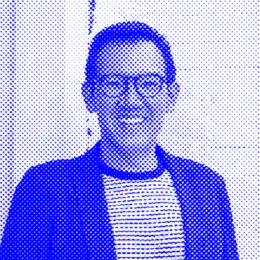
Anthony Vanky, PhD
Assistant Professor, Graduate School of Architecture, Planning and Preservation (GSAPP)
Project: Urban Data Science & Ethics
Project Description: Scholars have shown that AI systems are shaped by deep structural biases, from the partial datasets used to train them to the unequal outcomes they produce in real-world contexts. When deployed in urban settings, these systems risk amplifying existing inequities, yet planning students often lack accessible ways to understand how such technologies are built and how bias becomes embedded. This project addresses that gap by inviting both technical and non-technical students to collaboratively design, train, and critique an AI model grounded in an urbanist problem space. Beginning with a focus on the everyday act of sitting, students will construct an urban-centered computer vision dataset, confronting questions of representation, bias, and accountability through hands-on “critical making.” The long-term goal is to create a scalable pedagogical model and an open-source dataset that embeds urban justice and disciplinary knowledge into AI development.