
Wise Words
Get to know your colleagues! Read some of your colleagues’ Wise Words and spend 5 minutes filling out your own profile for a chance to quip short about your work, yourself, and your academic aspirations. You might even meet a long-term collaborator.
Submit your Wise Words here. (4-question only! We promise it's super short)
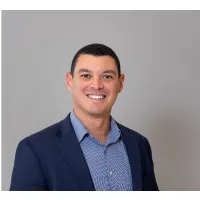
Ricardo Cruz-Acuña
Assistant Professor of Cancer Engineering
In one sentence, how would you describe your research, and in one sentence, why does it excite you?
I’m an engineer working in cancer biology: my lab designs synthetic materials that let us grow patient-derived epithelial tissue in a dish and control the physical environment around it, so we can ask how a stiffening tissue landscape pushes healthy cells toward tumors. It excites me because it lets me work at the seam between engineering and medicine; building the tool and then using it to answer a question that tool makes possible for the first time.
Is there a collaboration or idea you haven’t yet had the time, opportunity, or partner to pursue, but would love to explore in the future?
Our organoid platforms are epithelium-only by design, which means we’re watching tumorigenesis with the immune system edited out of the picture. I’d love to partner with immunologists to build matrices where T cells and macrophages can actually infiltrate, so we could ask how a stiffening matrix shapes immune exclusion — that’s a question I can’t answer alone, and it’s where matrix mechanics and immunotherapy response probably meet.
What is one piece of advice you would give to students (or to your early-career self)?
Being the least knowledgeable person in the room is a position worth seeking out, not surviving. Every real step in my career came from walking into a field where I didn’t speak the language yet (materials to cancer biology, engineering to the clinic), and the discomfort of that first year is the cost of being able to ask questions the people already there have stopped asking.
Finally, since joining Columbia, what’s one accomplishment (initiative, project, or contribution) you’d like to plug or celebrate?
My lab’s first R01, awarded this August by NIDCR, asks a question that matters to patients: most precancerous oral lesions never become cancer, but some do, and clinicians can’t yet tell which. We’re testing whether the physical environment around those cells is part of the answer. It’s a project that couldn’t sit in any one department — it takes surgeons and pathologists at the College of Dental Medicine, cancer biologists at the Herbert Irving Comprehensive Cancer Center, and biomedical engineers in my lab. That’s the part I celebrate: a first R01 built on a team Columbia made possible.
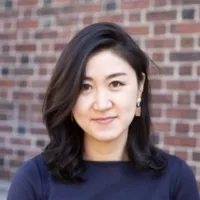
Eunji Kim
Assistant Professor of Political Science
1: In one sentence, how would you describe your research, and in one sentence, why does it excite you?"
I study how cultural narratives shape mass beliefs and political behaviors. It's intriguing to me to explore how the non-political media we consume for pleasure are not peripheral to democracy, but central to it.
2. Is there a collaboration or idea you haven’t yet had the time, opportunity, or partner to pursue, but would love to explore in the future?
Americans have never consumed this much foreign media, yet this explosion of cross-cultural exposure is happening alongside rising isolationism and nativist sentiment. I want to understand whether consuming another country's stories builds empathy and openness, or whether it can coexist comfortably with wanting to close the door. So - Netflix, if you're reading this, let's work together!
3. What is one piece of advice you wish you could give your student or early-career self?
I'd tell her to build a happiness that doesn't need a byline - the kind that sustains you between the milestones, not because of them.
4. Finally, since joining Columbia, what’s one accomplishment (initiative, project, or contribution) you’d like to plug or celebrate? (It’s not bragging, we asked.)
Publishing my first book, The American Mirage, with Princeton University Press. I made custom bottle openers with the book cover on them, so if you see me on campus, ask me for one!
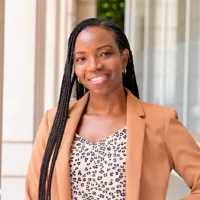
Asher Williams
Assistant Professor of Chemical Engineering
1: In one sentence, how would you describe your research, and in one sentence, why does it excite you?"
I engineer protein–glycan interactions to create new tools for vaccines, therapeutics, and immune modulation. It excites me because these molecular recognition systems sit at the interface of chemistry, biology, and engineering, where small design changes can unlock entirely new biomedical capabilities.
2. Is there a collaboration or idea you haven’t yet had the time, opportunity, or partner to pursue, but would love to explore in the future?
I would love to pursue deeper collaborations that integrate AI-guided molecular design with experimental glycoengineering to accelerate the discovery of programmable biomolecular recognition systems for diagnostics and immune therapies.
3. What is one piece of advice you wish you could give your student or early-career self?
Invest early in building collaborations and intellectual community, because science moves fastest when you are not trying to solve hard problems alone.
4. Finally, since joining Columbia, what’s one accomplishment (initiative, project, or contribution) you’d like to plug or celebrate? (It’s not bragging, we asked.)
Since joining Columbia, I am proud to have established an interdisciplinary research and training program that brings together chemical engineering, molecular biology, and immunology, while mentoring a diverse cohort of students and advancing biomedical applications within the chemical engineering framework.